
COMPETITION
Endless Cookie
Original:Endless Cookie
Director: Seth Scriver, Peter Scriver
Reason for selection
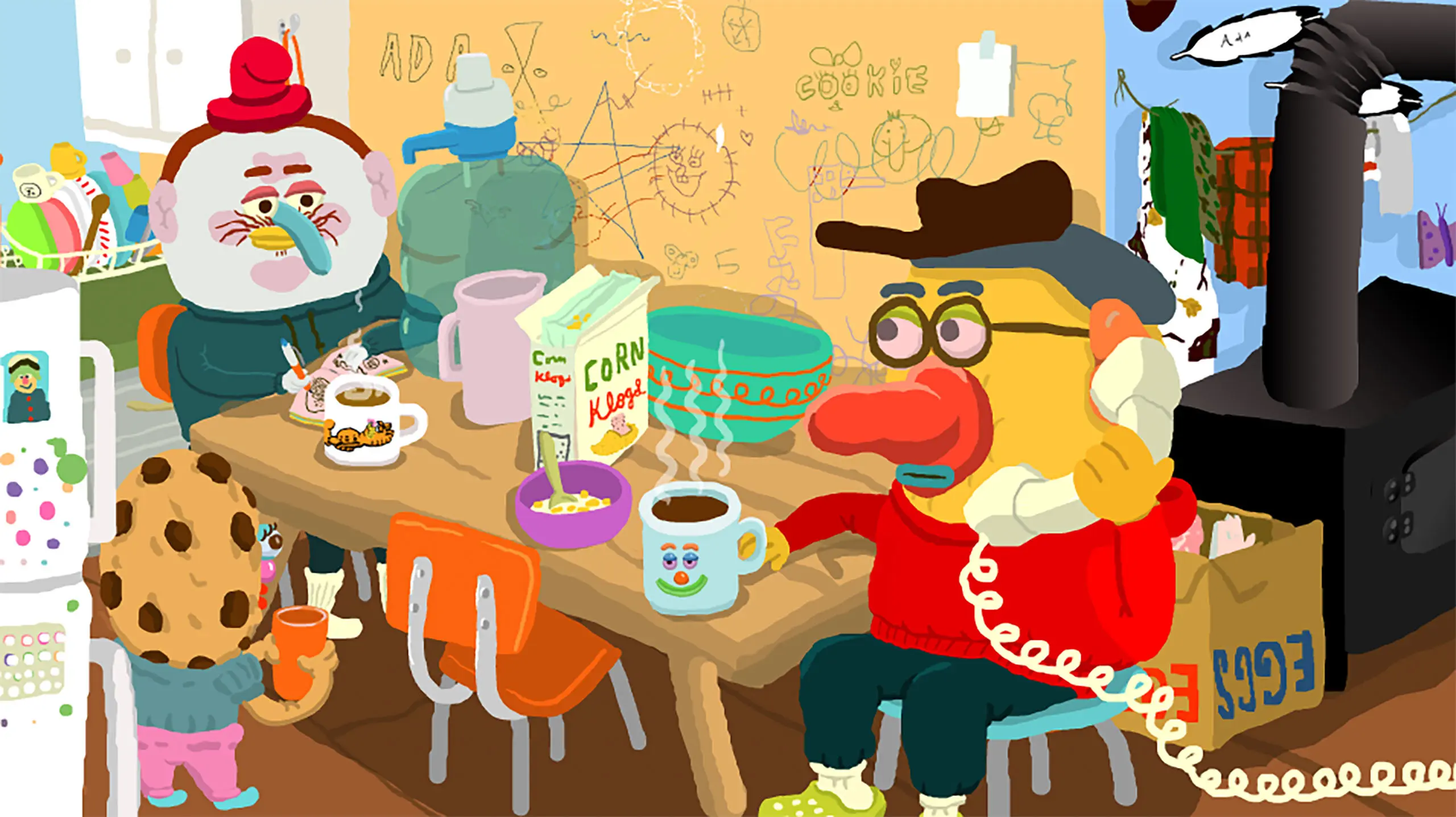
This film is a compelling work that skillfully weaves together personal narrative, creative process, and commentary on native Canadian culture. At its heart, the film is a story about family, offering an intimate look at the core unit while allowing the audience a peek into the very process of its creation. This meta-narrative, where the “insight within how you create animation” becomes a “story within itself,” deepens the viewer’s engagement and highlights the artistic bravery of the creators to “veer off from the intended story or structure” and “allow for happy mistakes” or “creative digression.” A powerful element of the film is its “Connection with native culture.” It approaches the difficult topic of “how fragmented it has become,” with the creative choice to mirror this societal brokenness in the film’s structure itself. This thematic density is balanced by a unique tone—a “Serious tone surrounded by absurd humor.” The “quirky design lends to the balance ensuring the weighty issues are digestible and engaging. With storylines like the arrested kid whose lawyer is depicted as a snake offering a grim choice, or the mention of a daughter who tragically killed herself, handled without being generic or sentimental. Crucially, the film manages to “Brings social issues to light without being overly emotional or pandering.” It employs a “unique way to talk about serious issues surrounding generational trauma and cultural displacement. The experience makes the audience “felt welcome to be part of the family,” allowing them to “Learn about their plight and celebrate their victory,” making “family history” a central, emotionally resonant theme.
A Story About Fire
Original Title: 燃比娃 Ran Bi Wa
Director: Wenyu Li
Reason for selection
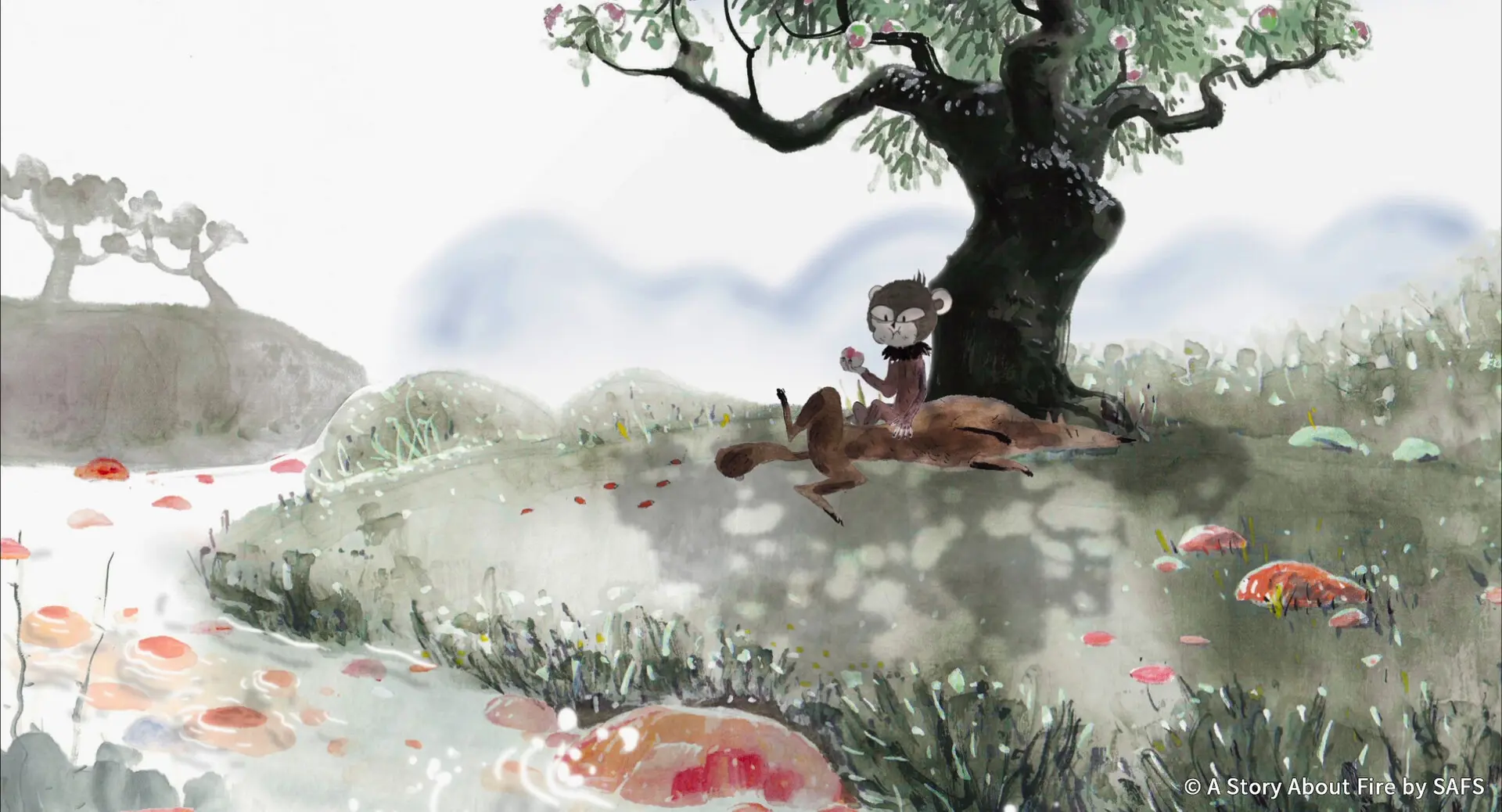
This work of exceptional artistry and thematic depth goes beyond the scope of a simple origin myth to explore profound questions of inheritance and transformation. It is not a story about the origin of humans, but a powerful reflection on what it means to become human. The narrative reframes the journey as one of transmission and rupture, where a human mother passes on intention—warmth and fire—rather than mere biology, a concept naturally embedded in the name’s suggestion of “a being that is becoming human, touching fire, and standing on the border.” This approach modernizes an ancient story, ensuring nothing is obvious or predictable. The film’s visual and technical execution is masterful. The artwork and its fantastical elements, immediately sets it apart with a unique class. The viewer can feel the tactile quality of the art, noticing the deftness of brush strokes, the paper texture, and the inclusion of diverse materials like embroidery, pieces of rock, and shadow puppets. The overall quality of the animation, from the movement of the humans and animals to the snow effects, is brilliant and masterfully executed, demonstrating an impressive diversity of techniques. Compositionally, the film is stunning; each frame looks like a painting, with well-thought-out shots that are never systematic or repetitive. The dramatic tension is elevated by the strategic use of gray and black until the reveal of the lava within. The narrative holds the suspense with drama, balanced by ample humor, which helps the audience become emotionally attached to the beautifully executed characterizations of the monkey, dogs, and wolves.
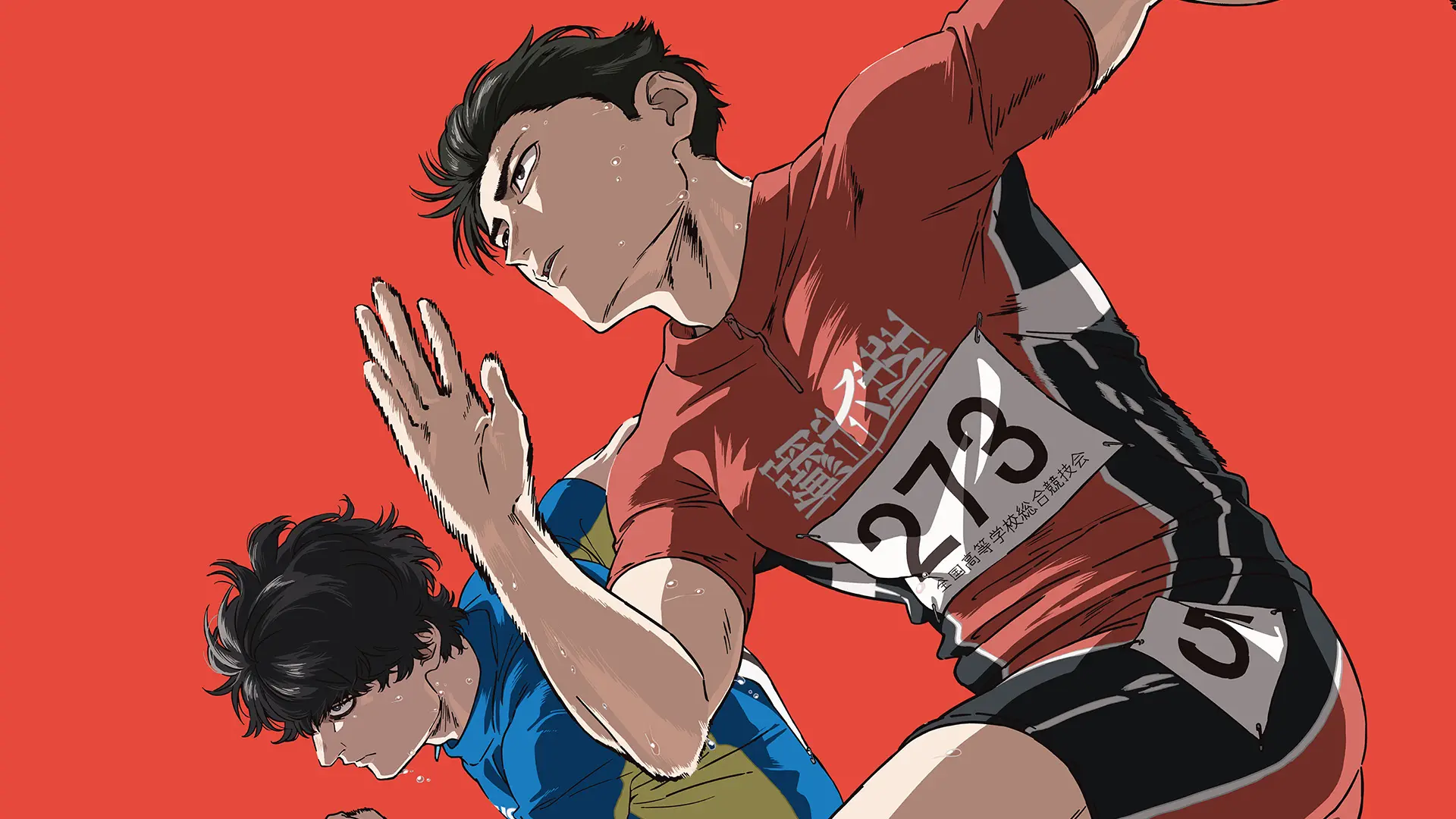
100 METERS (Hyakuemu.)
Original Title: ひゃくえむ。
Director: Kenji Iwaisawa
Reason for selection
The selection was determined by votes cast by audience members who viewed the films in the Competition section.
General Commentary
The inaugural edition of the ANIAFF showcased an exceptional breadth of artistic expression and storytelling, a testament to the discernment of the selection committee. The curated lineup was not only artistically driven but also remarkably accessible to a wide audience, ensuring that no film felt too obscure or distant. Every title offered a profound lesson and felt wholly original, steering clear of generic narratives. A defining characteristic of this year’s selection was the prevalence of universal themes regarding humanity—such as introspection, family bonds, and cultural identity—which resonated deeply across different cultural backgrounds. Films like Olivia and the Invisible Earthquake used a mainstream form to explore real-life themes of poverty and depression, while others ventured into more complex territory. For instance, we were introduced to social issues previously unfamiliar, such as First Nation issues in Canada, as seen in Endless Cookie, and the plight of indigenous people in Brazil as depicted in Nimuendaju, demonstrating the program’s commitment to global awareness. The selection was a truly international affair, with entries hailing from all corners of the world and no single region dominating the competition. This great variety in animation expressions ensured that all titles touched upon important themes, leaving a lasting impression. It was a privilege to share this diverse cinematic experience with the community of Nagoya, where the audience’s real-time reactions enhanced our understanding of the films. The winning works ultimately distinguished themselves by their ability to emotionally resonate with the jurors long after viewing. They were films that fully leveraged the unique possibilities of the animation medium, presenting visuals that looked new and fresh while simultaneously exemplifying the enduring strength and beauty of traditional animation techniques. It has been an honor to be part of the first edition of the ANIAFF, and we are confident that the high tone and artistic standard set by this selection will serve as a foundational benchmark for future ANIAFFs.